
The path to academic success is often paved with good preparation, and at the heart of effective preparation lies the study guide. Far more than just a list of topics, a well-crafted study guide for exams is your strategic blueprint for navigating complex material, prioritizing your efforts, and walking into the examination room with confidence. For any learner seeking to maximize their performance, understanding how to create and utilize these guides is an invaluable skill.
Why a Study Guide is Non-Negotiable
Many students rely on simply rereading notes or textbooks, a method that is largely passive and often yields poor retention. The difference a study guide for exams makes is the shift from passive consumption to active engagement.
- Focus and Prioritization: Exams rarely test every detail equally. A guide forces you to identify and focus on key concepts, high-yield information, and core objectives outlined by your instructor or syllabus.
- Structure and Organization: It acts as a framework, organizing disparate chapters, lectures, and readings into a cohesive, logical structure. This reduces the feeling of being overwhelmed by the sheer volume of material.
- Active Recall: Creating the guide itself is an act of active recall and synthesis, which cements the information in your long-term memory far more effectively than merely reading.
- Progress Tracking: It provides a clear checklist, allowing you to track your progress and ensure all essential topics have been covered before the exam date.
The Anatomy of an Effective Study Guide
A highly effective study guide for exams is structured and comprehensive, covering the entire scope of the assessment.
1. Administrative Details
- Exam Type and Format: Specify if it’s multiple-choice, essay-based, short-answer, or a combination. Knowing the format helps you tailor your study methods : memorizing definitions vs. practicing analytical writing.
- Date, Time, and Location: Essential logistical information to prevent last-minute stress.
- Materials Allowed: Note what you can bring : calculators, formula sheets, open-book status.
2. Core Content Outline
This is the substance of your guide, based directly on the syllabus, lecture notes, and assigned readings.
- Learning Objectives: Convert the instructor’s stated learning objectives for each unit into questions you must be able to answer.
- Key Concepts and Definitions: A precise list of terminology, theories, and laws. Use a flashcard-style format to make testing yourself easier.
- Important Formulas or Equations: For STEM subjects, list all relevant equations, noting the meaning of each variable.
- Historical Dates, Names, and Events: Essential for history and literature courses.
3. Synthesis and Application Sections
This moves beyond simple recall and encourages deeper understanding.
- Comparative Analysis: Create charts or tables to compare and contrast related concepts.
- Process Summaries: Outline multi-step procedures :scientific method, cell division, essay structure, using flowcharts or bulleted lists.
- Sample Problems/Scenarios: Include examples of the most challenging problems or hypothetical essay questions to practice your application skills.
Step-by-Step Guide to Creating Your Study Guide
The construction of your study guide for exams should be a systematic and intentional process.
Step 1: Gather and Consolidate Sources
Collect all relevant materials: syllabus, lecture slides/notes, assigned readings, and past quizzes or homework. The syllabus is your most authoritative source, as it dictates the scope of the exam.
Step 2: Determine Weighting and Focus
Review your materials for recurring themes and topics that took up the most lecture time. These are typically the most heavily weighted areas on the exam. Allocate study guide space proportional to the topic’s importance.
Step 3: Actively Synthesize the Material
Do not simply copy-paste notes. Read a section, close your book, and write the summary in your own words. Use techniques like mind mapping, outlining, or Cornell note-taking to organize the information as you add it to the guide.
Step 4: Use the Guide for Practice and Review
Once completed, the study guide for exams is not just a document; it is a tool for rehearsal.
- Practice Retrieval: Cover up the definitions and try to recall them from the key concept label.
- Teach the Guide: Explain the sections of your guide aloud to a peer, a pet, or even a mirror. The ability to teach a topic is a strong indicator of mastery.
- Highlight Remaining Weaknesses: As you study the guide, highlight the topics you struggle with. These become your priority items for the final phase of studying.
The Final Word
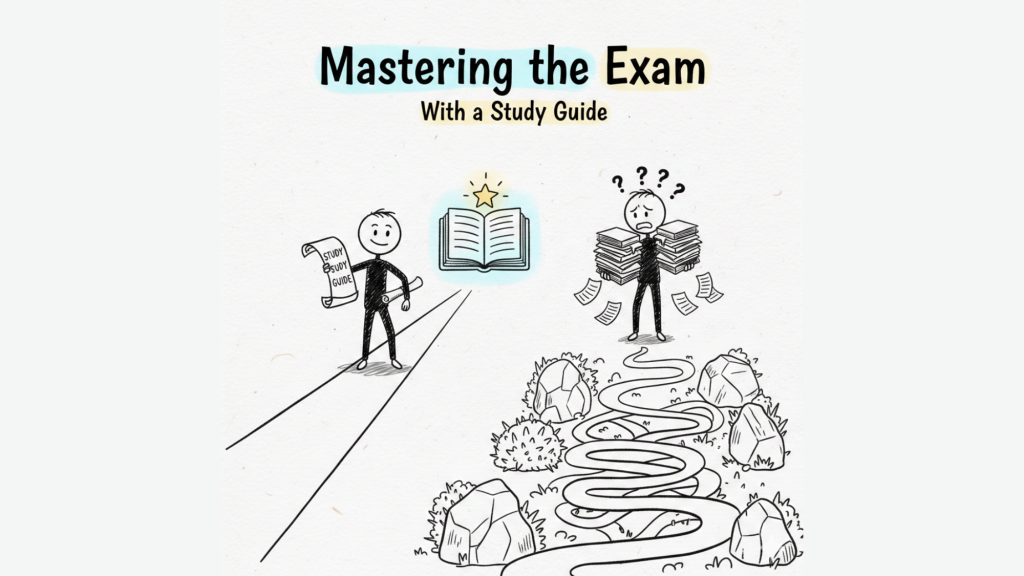
A comprehensive and personally tailored study guide for exams is the single most valuable asset a learner can possess during the examination period. It transforms a daunting mountain of information into a manageable, structured ascent. By committing to creating an active and detailed guide, you are not just preparing for a test,you are cultivating powerful study habits that will serve you throughout your entire academic and professional career. Embrace the guide, and embrace success.