

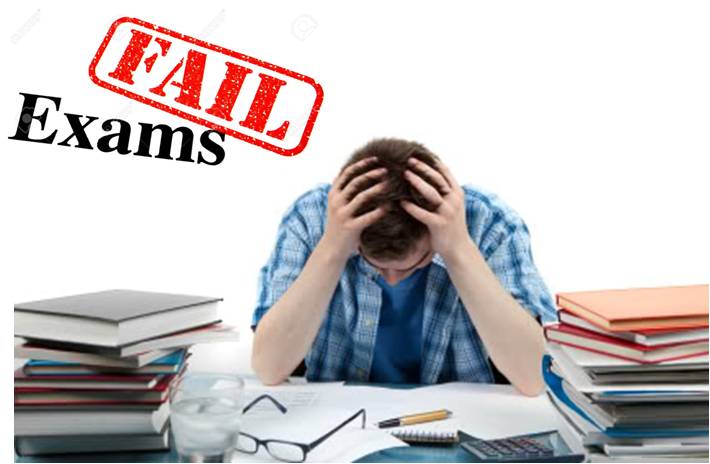
Failing your first exam in college hits like nothing else. One minute you’re unpacking dorm boxes and dreaming of a 4.0, the next you’re staring at a 42% in red ink, wondering if you even belong here. You’re not alone. Surveys from the National Center for Education Statistics show 68% of first-year students fail at least one exam, and 1 in 3 freshmen end the first semester on academic probation.
The good news? The same data proves that students who fail early and respond correctly often finish with higher final GPAs than those who coasted through with Bs. This isn’t toxic positivity, it’s what thousands of now-successful seniors, grad students, and professionals experienced. Here’s exactly what failing your first college exam actually means in 2025 and the step-by-step playbook to turn it into rocket fuel.
Failing Your First Exam in College: Why it’s Normal and Secretly Useful
College exams are deliberately harder than high-school finals. Professors use them as “diagnostic shock therapy”. They want to see who adapts fast. A failed first midterm usually signals one or more of these very fixable issues:
- Wrong study method e.g. re-reading notes instead of active recall
- Overconfidence from high-school habits
- Poor time management e.g. 3 a.m. TikTok spirals
- Not using office hours or syllabus clues
The students who panic and drop the class statistically perform worse long-term than those who treat the failure as free feedback.
Failing Your First Exam in College: Immediate 7-Day Recovery Plan
- Day 1 – Feel It, Then Close the Tab Cry, scream into a pillow, text your group chat etc., but set a 24-hour mourning limit. Emotions processed = brain ready to learn.
- Day 2 – Get the Truth Visit professor/TA during office hours, even if terrifying. Ask: “What three things separate an A from an F on your exams?” 90% will tell you exactly.
- Day 3 – Autopsy the Exam Redo every missed question correctly on blank paper. Categorize mistakes: careless, concept gap, or time pressure.
- Day 4-5 – Build a New System Switch to active recall using flashcards, practice problems, or teach a roommate. Use the Pomodoro 50/10 method. Block social media with Freedom or Cold Turkey.
- Day 6-7 – Schedule Weekly Wins Book recurring library blocks and office-hour slots for the rest of the semester and treat them like paid jobs.
Long-Term Strategies That Turn First-Exam Failers into 3.5+ GPA Students
- Join or create a serious study group with a max 4 people who actually quiz each other
- Use the university tutoring center the week exams are returned, not the night before the next one
- Track every grade in a simple spreadsheet; early detection beats end-of-semester panic
- Master the syllabus game, most professors literally tell you what’s on the test if you highlight bolded lines
Real Stories: “I Failed My First College Exam And…”
- “Got a 38% on Calc I midterm → graduated summa cum laude in engineering. That failure taught me spaced repetition faster than any A ever could.” – Reddit r/college
- “Failed org chem → now an MD. The professor who failed me wrote my strongest med-school letter after watching the comeback.” – Anonymous pre-med, Class of 2024
The Mindset Shift That Changes Everything
A failed exam is not a verdict on your intelligence, it’s data. Every straight-A high-school valedictorian who never studied meets their match in college. The students who succeed aren’t smarter; they’re faster at course-correcting.
Failing your first exam in college is painful, but it’s also the cheapest tuition you’ll ever pay for the real education: how to learn at the next level. One bad grade freshman year fades into nothing by graduation, but the resilience you build lasts forever.
You’ve already survived the worst part which was seeing the grade. Now the comeback story starts. You’ve got this
Pingback: Online Proctored Exam: 5-Step Success Blueprint