

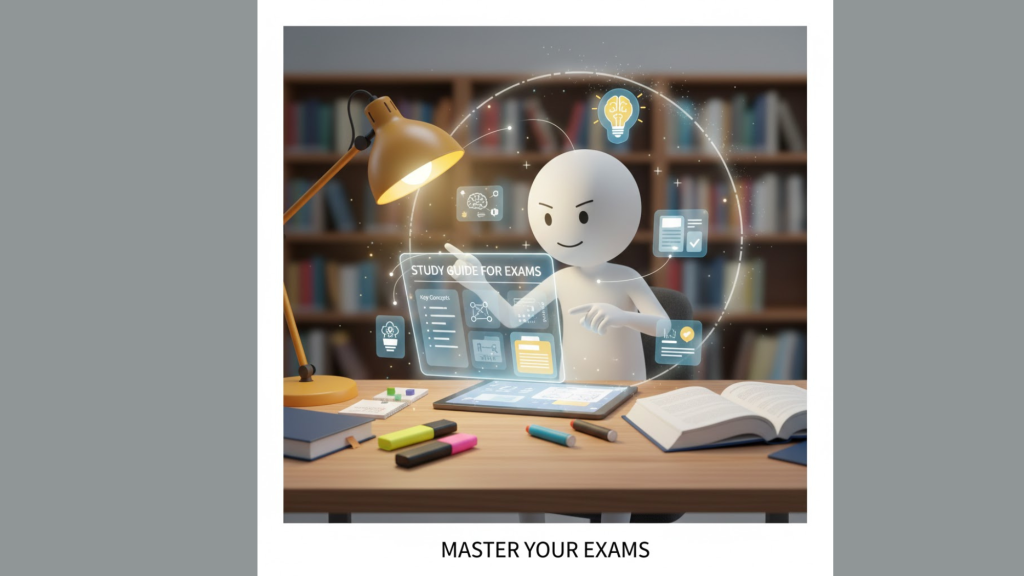
For many learners, preparing for high-stakes assessments can feel overwhelming. The volume of content, the pressure to perform, and the challenge of organizing information often create unnecessary stress. This is precisely why study guides for exams have become essential tools in modern education. By offering structure, clarity, and focus, study guides for exams help students transform large bodies of information into manageable learning pathways. When used correctly, they enhance comprehension, boost confidence, and significantly improve academic outcomes.
A major benefit of study guides for exams is their ability to break down complex topics into clearly defined components. Instead of navigating textbooks with scattered explanations, learners receive curated content arranged in logical, progressive steps. High-quality study guides include summaries, definitions, diagrams, and examples that reinforce central concepts. This structure allows learners to absorb information more efficiently and align their study sessions with learning objectives. Moreover, educational research consistently supports the effectiveness of well-organized instructional materials, making study guides for exams an invaluable part of any student’s toolkit. In addition, many institutions now encourage learners to design customized study guides for exams, as this deepens understanding through active engagement with the material.
Another key advantage is the flexibility that accompanies study guides for exams. Whether preparing for mathematics, sciences, languages, or humanities, students can adapt guides to match their personal learning styles. Visual learners may rely on diagrams, charts, and color-coding; verbal learners may prefer summaries and textual explanations; and kinesthetic learners may benefit from practice problems and interactive activities. As digital tools have become more accessible, it is now easier than ever to create, store, and revise personalized study guides for exams. Many learners also integrate technology by using apps, online platforms, or even AI-based assistants to generate structured notes, quizzes, and explanations, further enhancing the value of thoughtfully designed study guides for exams.
Beyond content organization, study guides for exams promote critical thinking. Instead of merely memorizing information, students learn to identify key themes, establish connections, and analyze the relevance of each topic. This higher-order engagement is especially crucial for exams that require application rather than recall. For instance, problem-solving subjects such as physics or economics demand conceptual understanding. In these cases, study guides for exams often include step-by-step solutions, case studies, and guided reasoning models. Such features help learners practice the cognitive processes that exam questions will later require. When students internalize these patterns of thought, they enter the exam room with both knowledge and strategy.
Finally, consistency and time management are much easier to maintain when using study guides for exams. Many guides include timelines, checklists, and recommended study routines that encourage disciplined learning habits. Students can track their progress, identify weaker areas, and adjust their schedules accordingly. This level of organization prevents last-minute cramming and fosters long-term retention. At the same time, well-structured study guides for exams help reduce anxiety by providing a sense of control over the learning process. When learners know what to study and how to study it, their confidence grows naturally.
In conclusion, study guides for exams play a pivotal role in supporting academic success. They offer structure, adaptability, critical-thinking support, and improved time management: all essential components of effective learning. For today’s learners, investing time in creating or selecting high-quality study guides for exams can make the difference between feeling overwhelmed and feeling prepared. Whether printed, digital, or self-designed, these guides provide a roadmap to mastery, empowering students to approach their exams with clarity, confidence, and purpose.

Pingback: Online Proctored Exam: 5-Step Success Blueprint
Pingback: Master Cosmetology Written Exam: 7-Step Success Blueprint