

Nursing offers multiple educational pathways, each varying in duration, cost, and scope of practice. The fastest program to become a nurse depends largely on your career goals and prior educational background.
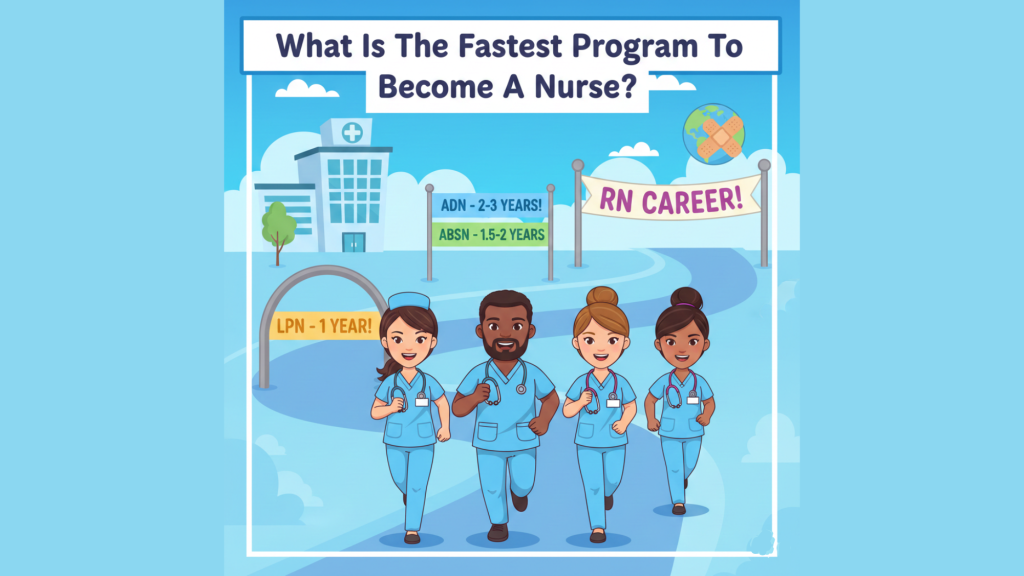
The quickest route for beginners is completing a Licensed Practical Nurse (LPN) or Licensed Vocational Nurse (LVN) program. These programs typically take 12 to 18 months to complete and prepare students to sit for the NCLEX-PN exam. LPNs provide foundational patient care under the supervision of registered nurses (RNs) and are commonly employed in nursing homes, long-term care facilities, and outpatient clinics. While this is the fastest program to become a nurse in terms of time, it offers a more limited scope of practice and lower earning potential compared to RN roles.
Those aiming to become a Registered Nurse (RN), the fastest program to become a nurse is the Associate Degree in Nursing (ADN), which usually requires two years of full-time study. Offered primarily at community colleges, ADN programs combine classroom instruction with clinical experience and lead to eligibility for the NCLEX-RN exam. Although this path enables quicker workforce entry than a four-year Bachelor of Science in Nursing (BSN), many employers now prefer or require BSN-prepared nurses.
Individuals who hold a bachelor’s degree in a non-nursing field can pursue an Accelerated Bachelor of Science in Nursing (ABSN). Recognized as the fastest program to become a nurse for career changers, ABSN programs can be completed in as little as 12 to 16 months. These intensive, full-time programs build on prior academic knowledge and include rigorous coursework and clinical rotations.Some institutions offer online or hybrid ABSN options, blending flexibility with comprehensive preparation.
Another option is the Direct-Entry Master of Science in Nursing (MSN), which typically spans 20 to 36 months and is ideal for those targeting leadership or advanced practice roles early in their nursing journey. While longer than an ABSN, it provides a graduate-level credential in a condensed timeframe.
It is important to note that all nursing pathways require licensure through the National Council Licensure Examination (NCLEX), and state-specific requirements may affect timelines. Additionally, while speed is a priority for many, program quality, accreditation, and clinical placement support significantly impact long-term career success.
The fastest program to become a nurse is the LPN/LVN diploma for immediate entry-level work, while the ABSN is the fastest program to become a nurse for those seeking RN licensure with a prior bachelor’s degree. Careful consideration of personal goals, financial resources, and desired career trajectory will guide the optimal choice among these accelerated pathways.